Physiotherapy clinics in Shirley and Olton, Solihull

PhysioPoint Resources

The use of ice for osteoarthritic pain.

A cool approach to short-term comfort during an osteoarthritis flare — alongside movement, exercise and a plan that fits your day-to-day life.

Cooling comfort

Keep moving

OA flare support

Osteoarthritis and cold packs

Ice can be a useful comfort tool — but it is not a cure for osteoarthritis.

Osteoarthritis can cause joint pain, stiffness and reduced confidence with movement. During a painful flare, particularly if a joint feels warmer or more swollen than usual, some people find a protected cold pack gives temporary relief.

Cold therapy does not reverse osteoarthritis or replace an individual treatment plan. It is best thought of as one small way to manage symptoms while you continue with the advice, movement and rehabilitation that support your longer-term goals.

!

A hot, swollen joint with feeling unwell needs urgent advice

Do not assume sudden severe pain, marked swelling, a hot joint, fever or feeling shivery is an osteoarthritis flare. Seek urgent medical advice, especially if symptoms are new or worsening quickly.

A cool approach to relief

What a cold pack may — and may not — do.

Everyone responds differently. You can use your symptoms and recovery after activity as a
guide to whether cold feels helpful for you.

Comfort

It may ease pain for a short time.

Helpful use

A cold pack may make a sore, warm or swollen joint feel more comfortable, especially after activity or during a temporary flare. The aim is short-term symptom relief, not to push through a painful task.

Expectations

It does not repair cartilage.

Important

Ice cannot reverse osteoarthritis or remove the cause of joint change. It can sit alongside the core parts of osteoarthritis care, including education, tailored exercise and support with everyday activity.

Choice

Heat may suit stiffness better.

Personal response

Some people prefer cold when a joint feels warmer or swollen; others find gentle heat more comfortable for stiffness. Use the option that feels best and does not irritate your skin or worsen symptoms.

Rehabilitation

Movement still matters.

Longer term

Use symptom relief to help you stay engaged with daily movement and your exercise plan. You may need to reduce the load temporarily, but complete rest is rarely the long-term answer.

How to use ice safely

Keep it protected, short and comfortable.

These are general safety pointers. Your physiotherapist may adapt them depending on the
joint involved, your skin, circulation, sensation and medical history.

01

Prepare

Use a layer between cold and skin.

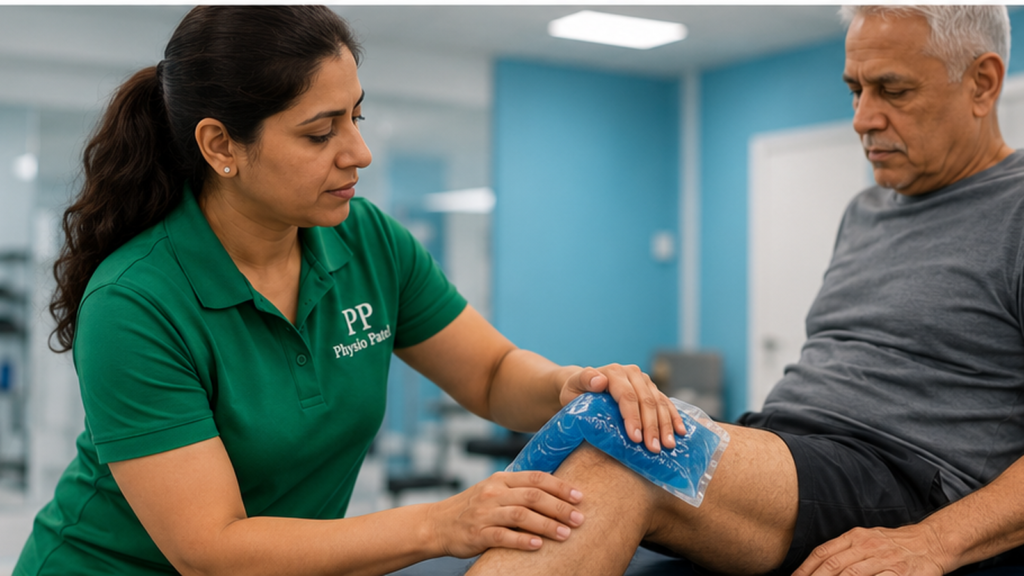
A reusable gel pack, a bag of frozen peas or crushed ice can be used. Always wrap it in a damp tea towel or cloth. Never place ice or a frozen pack directly onto bare skin.

02

Time

Keep the application brief.

Ten to fifteen minutes is usually enough for a small or bony area. Do not exceed 20 minutes, do not fall asleep with a pack on and check the skin during use.

03

Check

Stop if the skin reacts badly.

Some pinkness is normal. Remove the pack straight away if you notice burning, increasing pain, blotchy or blue skin, excessive numbness or blistering. Allow the skin to return to its normal temperature before using ice again.

Check before trying ice

Ask a clinician first if cold may not be suitable for you.

Get individual advice before using cold packs if you have reduced feeling in the area, poor circulation, Raynaud’s phenomenon, cold sensitivity, peripheral vascular disease, diabetes-related nerve changes, open skin or an active skin condition.

The bigger picture

Cold packs work best as an add-on to your wider osteoarthritis plan.

NICE recommends therapeutic exercise tailored to the individual for people with osteoarthritis. This can include local muscle strengthening and general aerobic fitness. The right plan should take account of your painful joint, current ability, health and goals.

Physiotherapy can help you build a manageable exercise programme, adapt activities during flares and develop confidence with everyday tasks. Your GP, pharmacist or physiotherapist can also advise on suitable pain-relief options and when a review is needed.

01

Use the tool that helps you keep moving.

Cold can be useful after activity or during a flare. It should support your ability to stay engaged with a sensible level of movement — not become the only strategy.

02

Get advice when your pattern changes.

Seek a clinical review if pain or swelling is new, persistent, rapidly worsening, affecting sleep or function significantly, or does not feel like your usual osteoarthritis symptoms.

Comfort and confidence

Simple, sensible support for managing joint symptoms.

Need individual guidance?

Find a practical plan for managing
osteoarthritis pain.

This page is for general education and does not replace a personal assessment, diagnosis
or medical advice.