Physiotherapy clinics in Shirley and Olton, Solihull

PhysioPoint Resources

Rotator cuff pain: move with more confidence.

Clear, evidence-led guidance on shoulder pain, rehabilitation, sensible activity changes and when an assessment may be needed.

Shoulder pain

Rehab advice

Activity changes

Rotator cuff pain explained

Shoulder pain is common — and the cause is not always a single damaged structure.

The rotator cuff is a group of four muscles and tendons that help control the shoulder and lift the arm. Pain in this area is often called rotator cuff-related shoulder pain. It may develop after an injury, repeated overhead activity, a change in activity levels, or gradually over time.

Terms such as tendinopathy, bursitis and impingement are often used for similar symptoms. A personal assessment is helpful because shoulder pain can have different causes, and the right plan depends on your history, movement, strength and goals.

!

Get urgent medical advice when needed

Seek urgent help if pain started after a significant fall or injury, your shoulder or arm has changed shape, you cannot move the arm, you have persistent numbness or loss of feeling, the joint is hot and swollen, or you feel feverish or unwell.

Common features

Rotator cuff-related pain can affect everyday movement.

Symptoms vary from person to person. They can build gradually or start after a specific
incident, and can make work, sport, dressing and sleep more difficult.

Movement

Pain when lifting or reaching.

Common pattern

Pain is often felt around the outside of the upper arm and may be worse when lifting, carrying, reaching overhead or reaching behind your back.

Sleep

It can be uncomfortable at night.

Common pattern

Some people find it difficult to lie on the affected side or wake when changing position. Supporting the arm with pillows can sometimes make sleep more comfortable.

Strength

The arm may feel weak or less reliable.

Focus

Pain can make the shoulder feel weak, especially during lifting. A clinician can assess whether this is pain-related or whether further investigation is appropriate.

Assessment

Scans are not always the first step.

Plan

A detailed history and examination can guide early care. Scans may be considered when the diagnosis is unclear, symptoms follow significant trauma, or results would change the management plan.

Practical first steps

Keep the shoulder involved in daily life, without repeatedly overloading it.

Complete rest is rarely the goal. A gradual, planned return to movement is usually more helpful than avoiding the arm altogether or repeatedly pushing through severe symptoms.

01

Pacing

Modify aggravating tasks temporarily.

Reduce the frequency, load or height of painful movements for a short period. This might include breaking tasks up, avoiding repeated overhead lifting and using both hands for heavier items.

02

Exercise

Use pain relief safely.

Progressive shoulder and upper-back exercises can help improve confidence, control and strength. The right starting point depends on your pain, movement, activity demands and health.

03

Comfort

Use symptom relief safely.

A pharmacist, GP or clinician can advise on suitable pain relief. Some people also find protected heat or cold helpful for short periods, alongside movement and rehabilitation.

Trusted external guidance

Read NHS advice about shoulder pain.

The NHS outlines common causes of shoulder pain, simple self-care and signs that require medical advice.

Treatment options

A good plan is built around your shoulder, your work and the activities that matter to you.

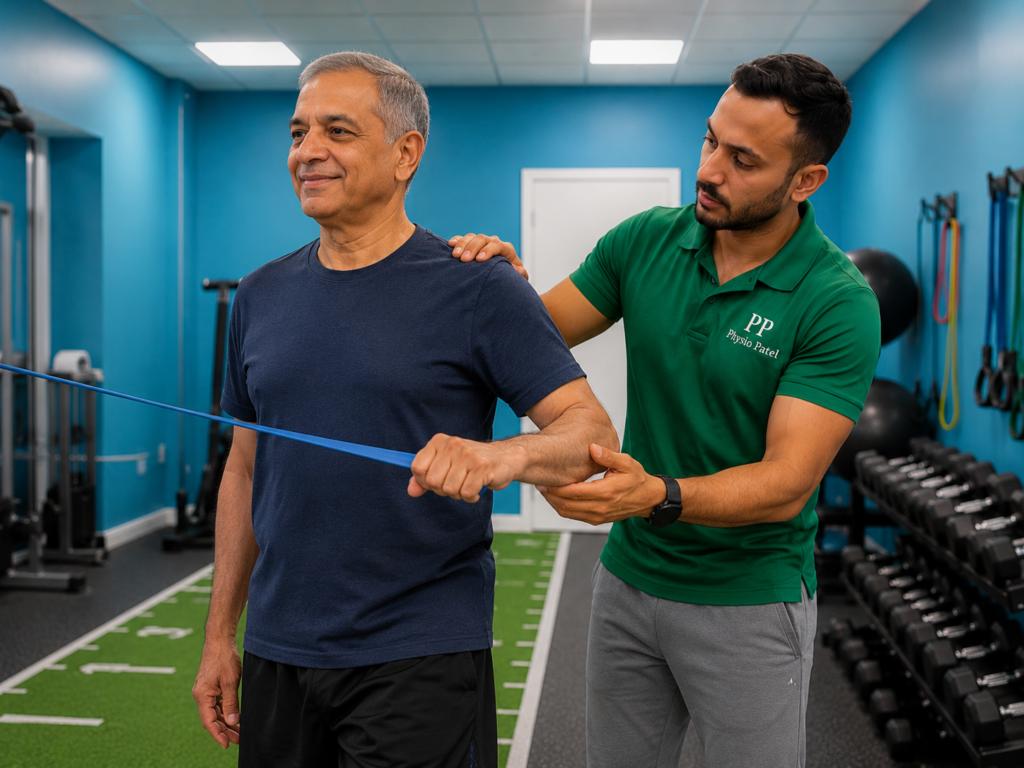
Physiotherapy can include education, activity advice and a progressive exercise programme to develop shoulder strength, movement and confidence. Hands-on techniques may be used where appropriate, but should support an active rehabilitation plan rather than replace it.

If symptoms remain limiting, a GP or specialist may discuss other options such as an injection or referral. Surgery is not routine for every rotator cuff problem; it is considered when there is a clear clinical reason, including some acute tears or ongoing substantial loss of function.

01

Start with what you can do.

We find a level of movement and exercise that is challenging enough to move you forward, but realistic enough to repeat consistently.

02

Progress toward real goals.

Your plan can focus on work tasks, gym movements, sport, sleep, lifting, dressing or simply using the arm with less worry.

Build shoulder confidence

A clear plan for restoring movement, strength and trust in your shoulder.

Need individual guidance?

Talk through your shoulder symptoms with a physiotherapist.

This page provides general education and does not replace a personal assessment,
diagnosis or medical advice.