Physiotherapy clinics in Shirley and Olton, Solihull

PhysioPoint Resources

Frozen shoulder: understand the stages and your options.

Clear, evidence-led guidance on shoulder stiffness and pain, sensible self-management and when a physiotherapy assessment may help.

Shoulder stiffness

Clear stages

Rehab focused

Frozen shoulder explained

Shoulder pain and stiffness can be slow to settle, but there are ways to manage it.

Frozen shoulder, also called adhesive capsulitis, affects the lining around the shoulder joint. The capsule can become painful, tight and stiff, making everyday movements such as reaching overhead, getting dressed or fastening a seat belt difficult. It can develop without a clear trigger, but may follow an injury, surgery or a period where the arm has not moved normally. A personal assessment is important because several shoulder conditions can feel similar and may need different treatment.

!

Get urgent medical advice when needed

Seek urgent help for severe shoulder pain after a significant injury, an obvious deformity, sudden inability to move the arm, a red or hot swollen joint with fever, or chest pain, breathlessness, sweating or nausea. These symptoms can need prompt medical assessment.

The usual pattern

Frozen shoulder often changes over time.

Not everyone follows the same timetable, but many people move through a pain-dominant
phase, a stiffness-dominant phase and a gradual recovery phase. Your symptoms and
priorities guide the plan at each stage.

Stage 01

Freezing: pain becomes more noticeable.

Focus

Pain may gradually increase, sometimes disturbing sleep, while the shoulder starts to lose movement. Treatment commonly focuses on pain control, gentle movement and keeping daily tasks manageable.

Stage 02

Frozen: stiffness may become the main issue.

Focus

As pain settles, the shoulder can feel very restricted, particularly with reaching behind the back or above shoulder height. Gradual, tailored mobility work may be introduced as tolerated.

Stage 03

Thawing: movement can slowly return.

Focus

Stiffness often eases gradually. Strength, confidence and functional movement can be built back in step by step for work, exercise and the activities that matter to you.

Assessment

Scans are not automatically required.

Plan

A clinician can often identify frozen shoulder from your history and examination. Imaging may be useful where the diagnosis is uncertain or another condition needs to be ruled out.

Managing your symptoms

A paced plan is usually more helpful than forcing through pain.

Management should fit the stage of your symptoms, your health and your goals. Exercises
may feel uncomfortable, but they should be tailored so that they are manageable and do not
cause a prolonged flare-up.

01

Movement

Keep the shoulder gently moving.

A physiotherapist can show you suitable mobility and stretching exercises. Avoid making up strenuous gym exercises when the shoulder is highly irritable, as this can aggravate pain.

02

Comfort

Use pain relief safely.

Simple pain relief or anti-inflammatory medication may be considered with advice from a pharmacist, GP or clinician, depending on your health and other medicines. Some people find protected heat helpful for short periods.

03

Daily life

Adapt tasks while you recover.

Small changes to work, sleep positions and activities can reduce repeated aggravation. The aim is to stay involved in life without repeatedly pushing the shoulder beyond what it can manage.

Trusted external guidance

Read NHS advice about frozen shoulder.

The NHS explains the condition, simple self-care and the types of treatment that may be offered following assessment.

Treatment choices

We will discuss the options that fit your stage, symptoms and goals.

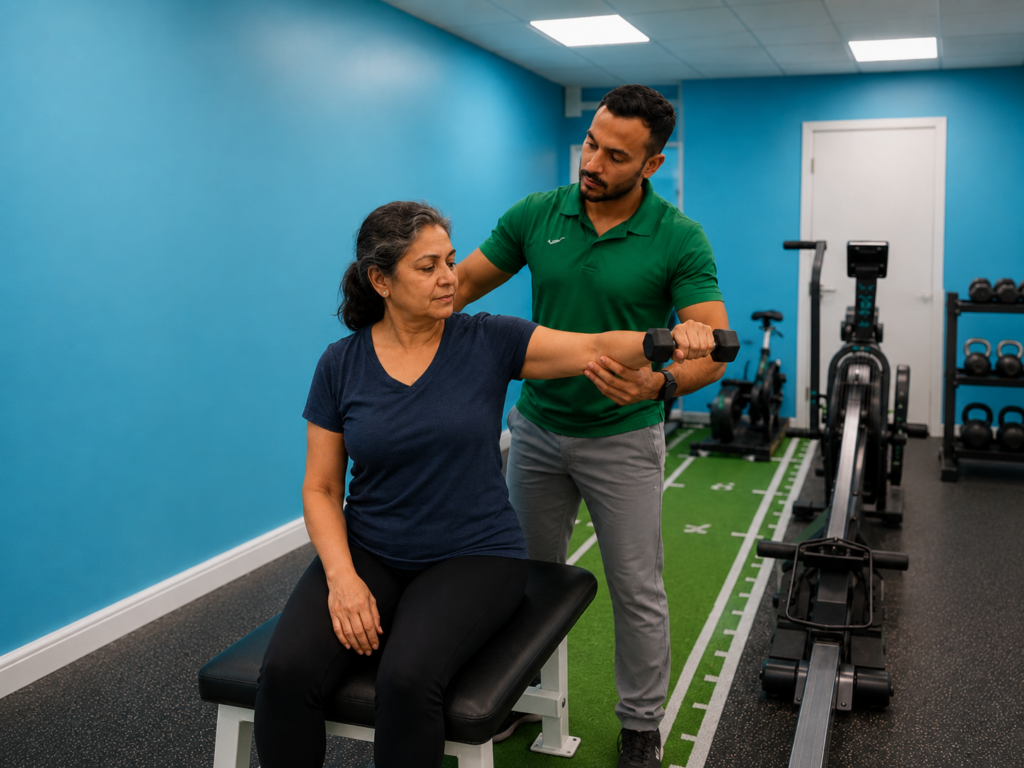
Physiotherapy can include education, a progressive exercise plan, advice on activity and hands-on techniques where appropriate. The objective is to make the shoulder easier to use while gradually improving movement, strength and confidence.

For some people, a clinician may discuss a corticosteroid injection to help with pain, particularly in the more painful phase. Hydrodilatation or specialist referral may be considered where symptoms remain severe or progress is limited. Surgery is usually considered only after non-surgical options have been explored and there is a clear clinical reason.

01

Know what is happening.

Understanding the stage you are in can help you make realistic decisions about movement, rest and the pace of rehabilitation.

02

Build function gradually.

We focus on practical targets such as sleeping more comfortably, getting dressed, returning to work and using the arm with more confidence.

Shoulder support

Guidance to help you move with more comfort and confidence.

Need individual guidance?

Talk through your shoulder symptoms with a physiotherapist.

This page provides general education and does not replace a personal assessment, diagnosis or medical advice.