Physiotherapy clinics in Shirley and Olton, Solihull

Joint Injections in Solihull

Clear information and individual care for joint injection treatment.

Following a full clinical assessment, injection options may be discussed to help manage inflammation, pain and stiffness as part of a wider rehabilitation plan.

Injection options

Pain management

Joint movement

Injection therapy at PhysioPoint

Decisions made around your symptoms, goals and rehabilitation.

Injection therapy is not the right choice for everyone. At PhysioPoint, any injection is considered only after a detailed assessment, a discussion of your symptoms and an explanation of the potential benefits, limitations and risks.

For some people, an injection may help settle pain and stiffness sufficiently to make movement, exercise and day-to-day activity more manageable. It is usually one part of a broader plan that may include physiotherapy, progressive exercise and practical self-management advice.

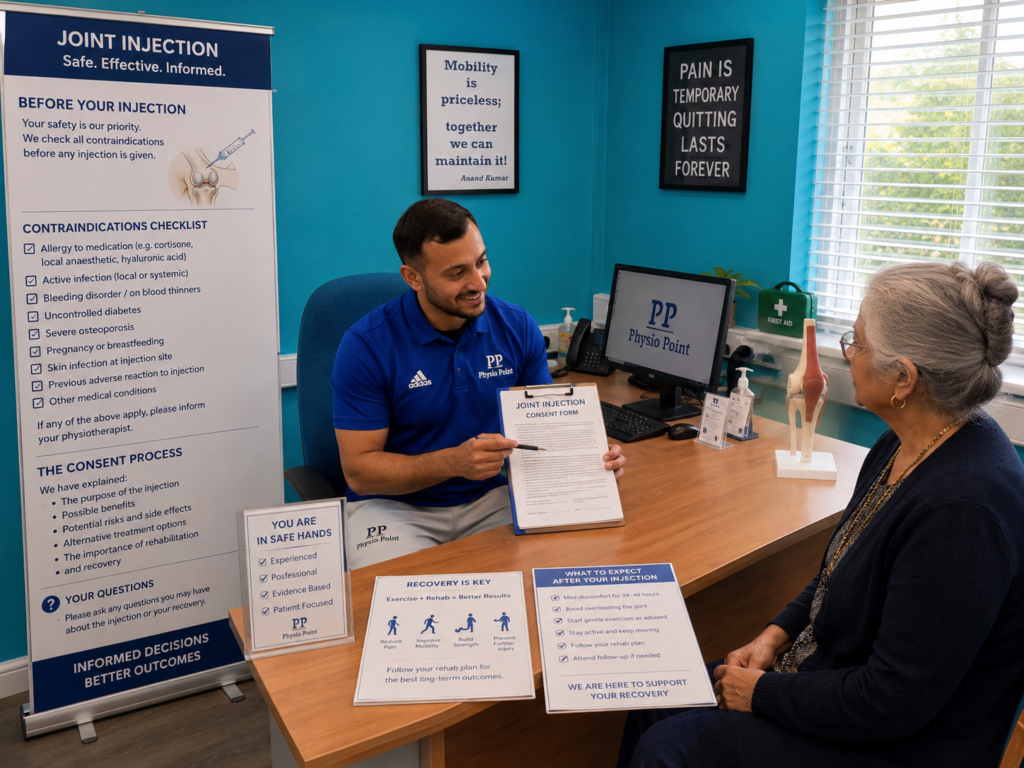
Informed, considered care

We take time to discuss what an injection may and may not achieve before you decide.

Corticosteroid injections

Often called steroid or cortisone injections.

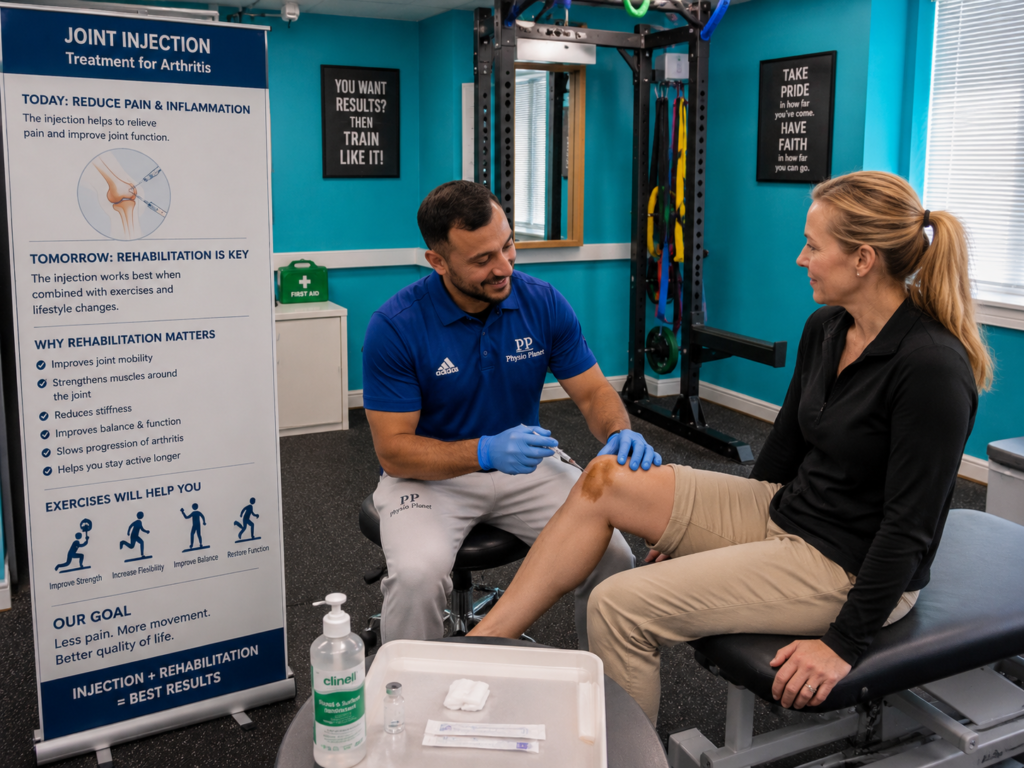
Corticosteroids are anti-inflammatory medicines and are not the same as anabolic steroids. A suitably trained clinician may consider this type of injection for painful, inflamed joints, tendons or bursae where it is clinically appropriate.

For some conditions, the aim is to reduce pain and stiffness for a period of time so that you can move more comfortably and engage with your rehabilitation. Responses vary from person to person, and an injection does not address every cause of pain.

The clinician will discuss the medicine being considered, why it may be suitable, possible side effects and the aftercare plan before treatment.

Conditions we may assess

01

Inflammatory joint pain and selected osteoarthritis-related symptoms

02

Shoulder pain, including adhesive capsulitis (frozen shoulder)

03

Bursitis, including greater trochanteric / hip bursitis

04

Tendinopathy or tendon-related pain, such as tennis or golfer’s elbow

05

Trigger finger, De Quervain’s tenosynovitis and selected wrist / hand symptoms

06

Other joint, tendon or soft-tissue conditions where assessment supports treatment

What to expect

A considered process, from assessment to rehabilitation.

The focus is always on making an informed choice and then using your treatment plan to support
safe, meaningful progress.

01

Assessment

We review your symptoms, health history, movement and rehabilitation goals, then consider whether injection therapy may be appropriate.

02

Informed choice

You can ask questions and discuss expected benefits, important risks, alternatives and what the treatment can realistically support.

03

Treatment & advice

If suitable and you choose to proceed, your clinician will provide treatment and explain your individual aftercare instructions.

04

Rehabilitation

We use any symptom improvement as an opportunity to progress mobility, strength and confidence through an appropriate plan.

Evidence-informed discussion

We explain the available options so you can make a decision with a clear understanding of the evidence.

Ostenil Plus

Hyaluronic acid injection information.

Ostenil Plus is a hyaluronic acid injection intended for use within a joint. The manufacturer describes it as a medical device for pain and restricted mobility in the knee and other large synovial joints, such as the hip and shoulder.

It may be discussed as part of an individual consultation, including what it is, how it is administered, potential side effects and whether it aligns with your needs and preferences.

Important guidance note

Current NICE guidance does not recommend intra-articular hyaluronan injections for the management of osteoarthritis. Your clinician can discuss the evidence, alternatives and whether a different approach is more appropriate for you.

Safety & aftercare

Important information before and after treatment.

All injections carry some risks. Your clinician will provide specific advice based on your health history, the type of injection being considered and the area being treated.

After a corticosteroid injection, temporary pain or swelling around the injection site can occur. You will be given individual aftercare advice; this commonly includes resting the treated joint and avoiding strenuous exercise for a short period.

Please tell your clinician about:

01

Any current infection, feeling unwell, or recent course of antibiotics.

02

Diabetes, blood-thinning medication, allergies and all regular medicines.

03

Pregnancy, possible pregnancy or breastfeeding.

04

Previous injection reactions, surgery or implants around the area being treated.

Seek urgent medical advice after an injection if you develop worsening redness, heat or swelling, a fever, feel unwell, or have severe symptoms that are not settling.

Private consultation

A considered conversation about the treatment options available.

A plan beyond the injection

Focused on helping you return to more comfortable movement.

Injection therapy is most useful when it supports your wider goals. We will help you understand the next steps for movement, strength, daily activities and rehabilitation.

Book a joint injection assessment at PhysioPoint.

Contact our Shirley or Olton clinic to discuss your symptoms and arrange an individual assessment.